2 Cartridge Filter Housing: Selection, Sizing and Applications Guide
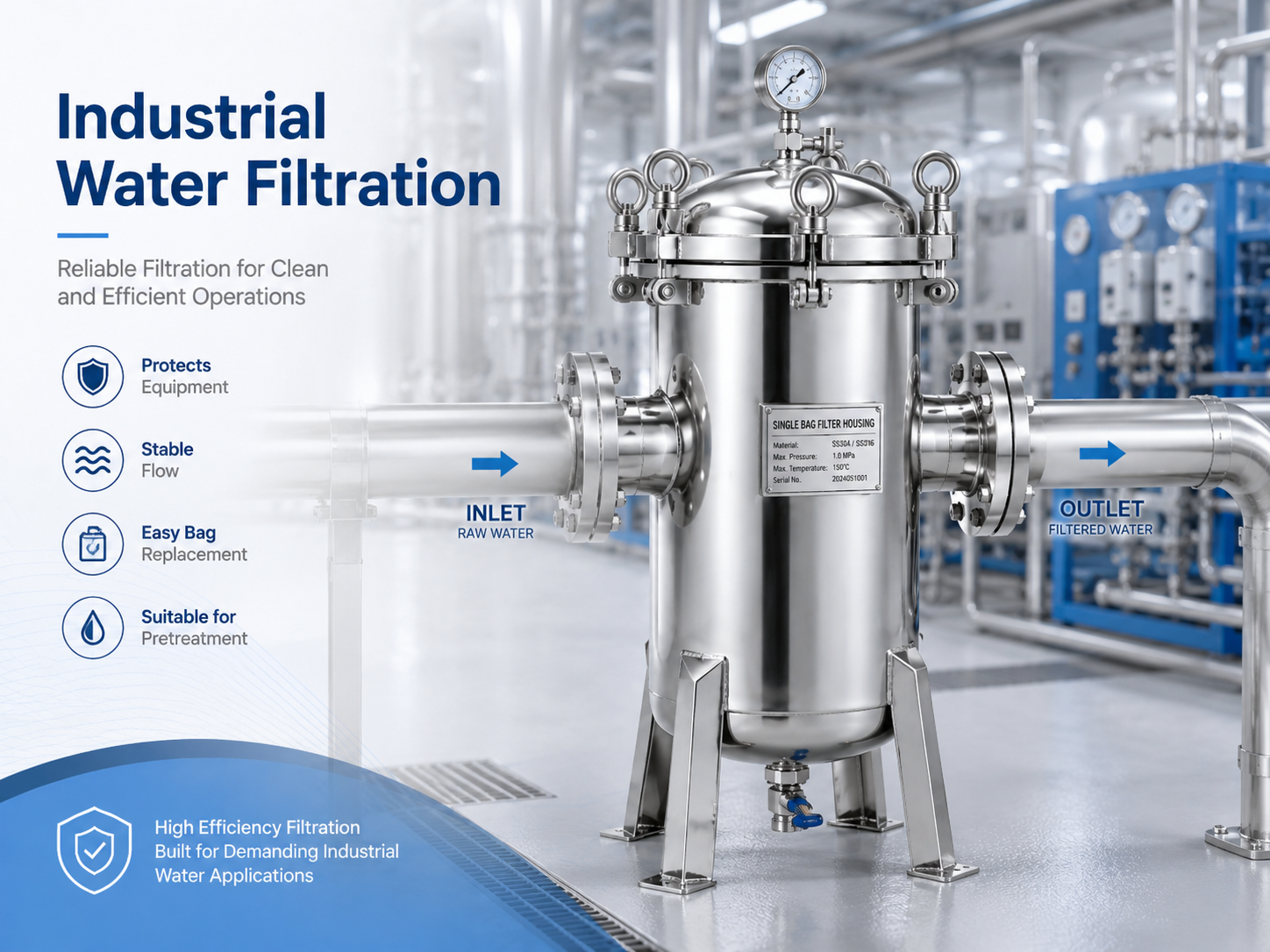
A 2 cartridge filter housing is a pressure vessel designed to hold two filter cartridges inside one housing. It provides more filtration area than a single-cartridge housing while maintaining a relatively compact footprint.
For industrial liquid filtration, a two-cartridge configuration is often selected when a single cartridge cannot provide enough flow capacity or dirt-holding capacity, but a larger multi-cartridge vessel would be unnecessarily large or expensive.
Typical applications include:
- RO pretreatment
- Industrial process water
- Cooling water
- Food and beverage processing
- Chemical filtration
- Paints and coatings
- Pharmaceutical process water
- Pre-filtration and final polishing
Stainless steel versions are commonly manufactured in SS304 or SS316L and can be configured for different cartridge lengths, micron ratings, end connections and operating conditions.
What Is a 2 Cartridge Filter Housing?
A 2 cartridge filter housing, sometimes called a two-round cartridge filter housing, contains two replaceable filter elements installed inside the same pressure vessel.
During operation, the process liquid enters the housing and is distributed around the cartridges. Depending on the cartridge design, liquid passes through the filter media, contaminants are retained by the cartridge, and filtered liquid exits through the housing outlet.
The two cartridges normally operate in parallel.
This means the total flow is divided between the two filter elements rather than forcing the full system flow through one cartridge.
The result can be:
- Higher available flow capacity
- Lower loading per cartridge
- Larger effective filtration area
- Longer cartridge service life
- Reduced pressure drop
- Less frequent cartridge replacement
For small and medium industrial filtration systems, this makes a 2-cartridge housing an efficient step between a single-cartridge unit and a large multi-cartridge housing.
2 Cartridge Filter Housing vs Dual-Stage Filter Housing
These two terms are sometimes confused.
A 2 cartridge filter housing usually refers to one pressure vessel containing two cartridges operating in parallel.
A dual-stage filter system, on the other hand, usually contains two separate filtration stages connected in series.
For example:
Stage 1: 20 micron sediment cartridge
↓
Stage 2: 5 micron pleated cartridge
This is different from a two-round housing, where two cartridges of the same filtration stage are normally installed inside one vessel.
If your objective is to increase flow capacity, a 2-round cartridge filter housing may be appropriate.
If your objective is to remove different contaminants in sequence, a two-stage filtration system may be more suitable.
Why Use Two Cartridges Instead of One?
The main reason is additional filtration area.
Imagine that a process requires a flow of 6 m³/h.
If the selected cartridge is recommended to operate at approximately 3 m³/h under the actual process conditions, one cartridge would be undersized.
Using two cartridges allows the required flow to be distributed between them:
Flow per cartridge = Total system flow ÷ Number of cartridges
In this example:
6 m³/h ÷ 2 = 3 m³/h per cartridge
However, cartridge quantity should never be selected from flow rate alone.
Actual performance also depends on:
- Cartridge construction
- Cartridge length
- Micron rating
- Liquid viscosity
- Solids concentration
- Temperature
- Initial differential pressure
- Maximum allowable differential pressure
- Required cartridge life
For this reason, the recommended operating flow supplied by the cartridge manufacturer should always be used during final sizing.
Main Advantages of a 2 Cartridge Filter Housing
1. Increased Filtration Area
Two cartridges provide more effective filtration surface than one cartridge of the same type and length.
More area can reduce the filtration load placed on each element.
2. Higher Flow Capacity
Because the fluid is distributed across two cartridges, the housing can accommodate a higher flow than an equivalent single-round housing when the same cartridge technology is used.
3. Lower Differential Pressure
Reducing the flow through each individual element can help reduce initial pressure drop.
Maintaining a reasonable differential pressure is particularly important when protecting pumps, RO membranes and other downstream equipment.
4. Longer Cartridge Life
More available filtration area generally means contaminants are distributed over a larger media area.
Under suitable operating conditions, this can extend the interval between cartridge replacements.
5. Compact Design
A two-round vessel provides increased capacity without moving directly to a much larger industrial multi-cartridge housing.
This can be useful when installation space is limited.
6. Flexible Cartridge Selection
Depending on the internal design, two-cartridge housings can be manufactured for various filter elements, including:
- Melt blown filter cartridges
- String wound filter cartridges
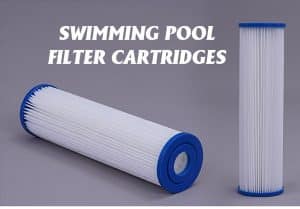
- Pleated filter cartridges
- Membrane filter cartridges
- Activated carbon cartridges
- Stainless steel filter cartridges
How to Select a 2 Cartridge Filter Housing
Correct housing selection should begin with the process requirements rather than simply choosing a vessel by cartridge quantity.
Step 1: Determine Required Flow Rate
Identify both:
- Normal operating flow
- Maximum or peak flow
Do not size the housing only according to the nominal capacity of the pump.
The selected filter cartridges must be capable of handling the actual process flow at an acceptable pressure drop.
A simple initial calculation is:
Required Cartridge Quantity = System Flow ÷ Recommended Flow per Cartridge
If the result is close to two cartridges, a 2 cartridge filter housing may be suitable.
Final selection should then consider pressure drop and contaminant loading.
Step 2: Select Cartridge Length
Standard industrial cartridges are commonly available in:
| Cartridge Length | Typical Use |
|---|---|
| 10 inch | Small systems and low flow |
| 20 inch | Small-to-medium industrial filtration |
| 30 inch | Higher capacity process filtration |
| 40 inch | Higher flow and longer service cycles |
Longer cartridges provide more filtration area without necessarily increasing the number of cartridges.
For example, a 2 × 40-inch cartridge housing can offer significantly more filtration area than a 2 × 10-inch configuration.
The best length depends on available installation height, target flow and maintenance requirements.
Step 3: Choose the Housing Material
SS304 Stainless Steel
SS304 is commonly used for:
- Industrial water
- Process water
- Cooling water
- General liquid filtration
- Non-aggressive fluids
It provides a good balance between corrosion resistance and cost.
SS316L Stainless Steel
SS316L is normally preferred for more demanding applications such as:
- Food and beverage processing
- Pharmaceutical production
- Chemical processing
- High-purity water
- Higher chloride environments
- Corrosive process liquids
The correct material should always be confirmed against the chemical composition, concentration and operating temperature of the fluid.
Step 4: Select the Cartridge End Connection
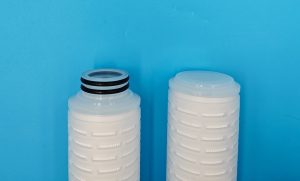
Cartridge-to-housing sealing is critical because poor sealing can allow unfiltered liquid to bypass the filter media.
Common industrial cartridge configurations include:
DOE — Double Open End
DOE cartridges are open at both ends and are widely used for general industrial filtration.
Typical cartridge types include:
- Melt blown PP
- String wound
- Pleated PP
- Activated carbon
DOE designs are economical and widely available.
222 O-Ring
A 222 configuration uses double O-rings to provide a positive seal between the cartridge and housing.
It is frequently used where tighter sealing is required.
226 O-Ring
A 226 cartridge also uses double O-rings but incorporates a locking mechanism that helps secure the cartridge in position.
222 and 226 configurations are common with higher-precision pleated and membrane cartridges.
The housing internals must match the selected cartridge end cap.
Step 5: Determine the Required Micron Rating
The filter housing itself does not determine filtration accuracy.
Filtration accuracy is determined primarily by the cartridge installed inside the housing.
Common ratings include:
- 0.2 micron
- 0.45 micron
- 1 micron
- 5 micron
- 10 micron
- 20 micron
- 50 micron
- 100 micron
For example, RO pretreatment may use a fine sediment cartridge, while paint or chemical processing may require a different micron rating depending on the contaminant size and process requirement.
Nominal and absolute micron ratings should also not be treated as identical specifications.
Step 6: Check Operating Pressure and Temperature
Before purchasing a housing, provide the supplier with:
- Normal operating pressure
- Maximum pressure
- Design pressure
- Operating temperature
- Maximum temperature
Pressure ratings vary significantly by housing construction, closure method, wall thickness and applicable pressure-vessel requirements.
Never select a pressure vessel solely from its appearance or connection size.
Step 7: Choose the Inlet and Outlet Connections
Industrial 2 cartridge filter housings may use:
- BSP threaded connections
- NPT threaded connections
- Tri-Clamp sanitary connections
- DIN flanges
- ANSI flanges
- Welded connections
Connection size should be selected according to required flow and piping design.
An undersized inlet or outlet can create unnecessary velocity and pressure loss even when sufficient cartridge filtration area is available.
Step 8: Select the Correct Seal Material
Common gasket and O-ring materials include:
- EPDM
- Silicone
- NBR/Buna-N
- FKM/Viton
- PTFE
Seal selection depends on chemical compatibility and temperature.
For chemical filtration applications, the compatibility of the housing, cartridge and gasket should all be checked together.
Typical Applications
RO Pretreatment
A cartridge filter housing is commonly installed before reverse osmosis membranes to capture suspended particles and help protect the membrane system.
A two-cartridge design can be suitable for small and medium commercial or industrial RO systems where a single element does not provide sufficient capacity.
Industrial Water Treatment
Applications include:
- Well water filtration
- Process water
- Cooling water
- Recycled water
- Boiler feed pretreatment
- Final polishing
Food and Beverage
With appropriate sanitary construction and materials, cartridge housings can be used for filtration of:
- Process water
- Beverage water
- Beer
- Wine
- Juice
- Syrup
- Edible liquids
SS316L and sanitary connections are commonly specified for hygienic processes.
Chemical Processing
Two-cartridge filter housings can remove particulate contamination from:
- Solvents
- Process chemicals
- Acids and alkaline solutions
- Coatings
- Inks
- Cleaning fluids
Material and seal compatibility must be confirmed before use with aggressive chemicals.
Paints, Inks and Coatings
Cartridge filtration helps remove particles, agglomerates and unwanted contaminants before subsequent production or filling processes.
Pharmaceutical and High-Purity Water
Sanitary stainless steel housings equipped with appropriate high-precision cartridges may be used in high-purity process filtration.
Applications requiring hygienic or sterile processing need additional consideration of surface finish, drainability, cleaning and validation requirements.
Single vs 2 Cartridge vs Multi-Cartridge Filter Housing
| Feature | Single Cartridge | 2 Cartridge | Multi-Cartridge |
|---|---|---|---|
| Cartridge quantity | 1 | 2 | 3 or more |
| Flow capacity | Low | Low to medium | Medium to very high |
| Filtration area | Lowest | Increased | High |
| Footprint | Very compact | Compact | Larger |
| Initial cost | Lowest | Moderate | Higher |
| Maintenance | Simple | Simple | More cartridges to replace |
| Typical application | Point-of-use | Small industrial systems | High-flow industrial systems |
A 2 cartridge filter housing is particularly useful when the required capacity is slightly beyond a single-round housing but does not justify a much larger multi-round vessel.
2 Cartridge Housing or High-Flow Cartridge Housing?
These configurations solve similar problems in different ways.
A traditional multi-cartridge vessel increases capacity by installing more standard cartridges.
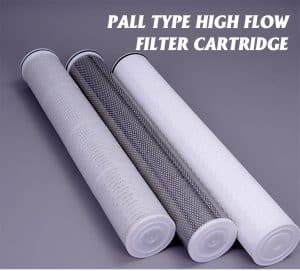
A high-flow housing instead uses one or more large-diameter high-flow filter elements with substantially greater filtration area per cartridge.
Choose a standard two-cartridge configuration when:
- Standard cartridges are already used at the plant
- Replacement cartridge availability is important
- Flow requirement is moderate
- Equipment size and cost need to remain controlled
Consider a high-flow cartridge housing when:
- Very high flow is required
- Minimizing cartridge quantity is important
- Maintenance labor needs to be reduced
- A high-flow cartridge format is already standardized at the facility
How Do You Know When a 2 Cartridge Housing Is Too Small?
A larger multi-cartridge housing should be considered when:
- Required flow exceeds the recommended capacity of two cartridges
- Initial differential pressure is already high
- Fluid viscosity is significantly above water
- Contaminant loading is high
- Cartridge replacement is too frequent
- Continuous production makes shutdown expensive
- Future flow expansion is expected
Selecting a housing only large enough for today’s average flow can result in excessive cartridge consumption later.
A properly sized system should consider both current and future operating conditions.
Information to Provide When Requesting a Quote
To select the correct 2 cartridge filter housing, provide your manufacturer with the following information:
- Process liquid
- Required flow rate
- Operating pressure
- Operating temperature
- Required micron rating
- Cartridge material
- Cartridge length
- DOE, 222 or 226 connection
- Housing material — SS304 or SS316L
- Inlet/outlet connection type and size
- Gasket material
- Required surface finish
- Application or industry
- Any required pressure-vessel or sanitary standard
Providing this information at the beginning of the project makes housing selection faster and reduces the risk of incorrect sizing.
Frequently Asked Questions About 2 Cartridge Filter Housings
What is a 2 cartridge filter housing?
A 2 cartridge filter housing is a pressure vessel designed to hold two replaceable filter cartridges. The two elements usually operate in parallel to increase filtration area and flow capacity compared with a single-cartridge housing.
Is a 2 cartridge filter housing the same as a dual-stage filter?
No. A two-cartridge housing normally contains two cartridges inside one vessel working at the same filtration stage. A dual-stage system typically uses two filtration stages connected in series.
What flow rate can a two-cartridge filter housing handle?
There is no universal flow rating.
The actual flow depends on cartridge type, cartridge length, micron rating, fluid viscosity, solids loading, inlet/outlet size and allowable differential pressure.
The correct method is to determine the recommended operating flow of the selected cartridge and then calculate the required number of cartridges.
Can a 2 cartridge housing use 40-inch cartridges?
Yes. Industrial cartridge housings can be designed for cartridge lengths such as 10, 20, 30 and 40 inches.
The exact housing must be manufactured for the required cartridge length.
Which is better, SS304 or SS316L?
SS304 is generally suitable for standard industrial water and many non-corrosive liquids.
SS316L provides greater corrosion resistance and is often selected for chemical, food, beverage, pharmaceutical and higher-chloride applications.
Fluid compatibility should always be confirmed before final material selection.
Can melt blown cartridges be used?
Yes, provided the housing internals are designed for the cartridge dimensions and end configuration.
A 2 cartridge filter housing can potentially accommodate melt blown, string wound, pleated, membrane and other cartridge types.
What is the difference between DOE, 222 and 226 cartridges?
DOE means Double Open End and is commonly used for general industrial filtration.
222 and 226 cartridges use O-ring sealing and are frequently selected when a more positive cartridge-to-housing seal is required.
Housing internals must be compatible with the selected end cap.
When should I choose more than two cartridges?
Consider a larger multi-cartridge housing when two cartridges cannot meet the required flow at an acceptable differential pressure or when contaminant loading causes excessively frequent filter changes.
Choosing the Right 2 Cartridge Filter Housing
A 2 cartridge filter housing offers a practical balance between filtration capacity, equipment footprint and investment cost.
For many industrial processes, it provides an efficient upgrade from a single-cartridge filter without requiring the size and cost of a large multi-cartridge vessel.
The most important point is that cartridge quantity should not be selected alone.
A reliable filtration system requires the correct combination of:
flow rate + cartridge type + filtration area + micron rating + housing material + pressure rating + connection size + chemical compatibility.
Ince Filters can configure cartridge filter housings according to your process requirements, including cartridge quantity, length, housing material, connection type and filter cartridge compatibility.
For a more accurate selection, send us your flow rate, liquid type, filtration micron rating, operating pressure and operating temperature. These five parameters provide a strong starting point for selecting the correct filter housing.
TAGs: pleated liquid filter cartridges china 5 micron filter wholesaler how to choose industrial filter bags 0.22 Micron Pleated Filter Cartridges industrial liquid filter bags Polyester Felt Liquid Filter Bag Pleated Filter Cartridge Manufacturer Pleated Filter Cartridge Factory Pleated Liquid Filter Cartridges How to Choose a Reliable Pleated Filter Cartridge Manufacturer Pleated Liquid Filter Cartridges pleated membrane cartridgesRelated Posts