The Ultimate Guide to Industrial Liquid Filter Bags: Materials, Micron Ratings, and Performance Optimization (2026 Edition)
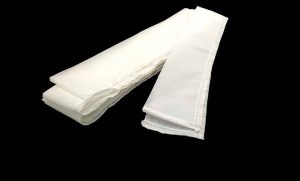
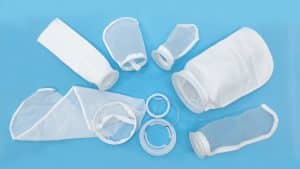
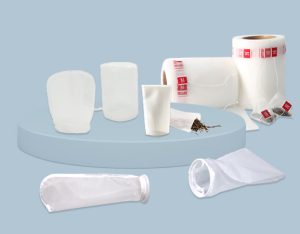
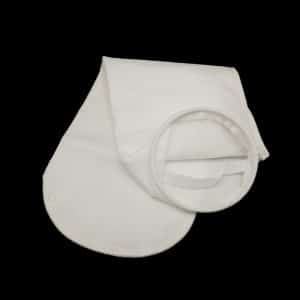
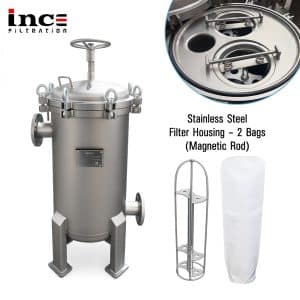
In the rapidly evolving landscape of industrial processing, the efficiency of your filtration system is often the thin line between a high-quality end product and a costly batch failure. Liquid Filter Bags remain one of the most versatile and cost-effective solutions for removing contaminants from process fluids. However, with the global bag filter market projected to reach $9.26 billion by 2026, the sheer variety of materials, micron ratings, and construction methods can be overwhelming for even experienced procurement managers.
This comprehensive guide explores everything you need to know about liquid filter bags to ensure process purity, equipment longevity, and optimized operational costs.
1. Understanding the Fundamental Role of Liquid Filter Bags
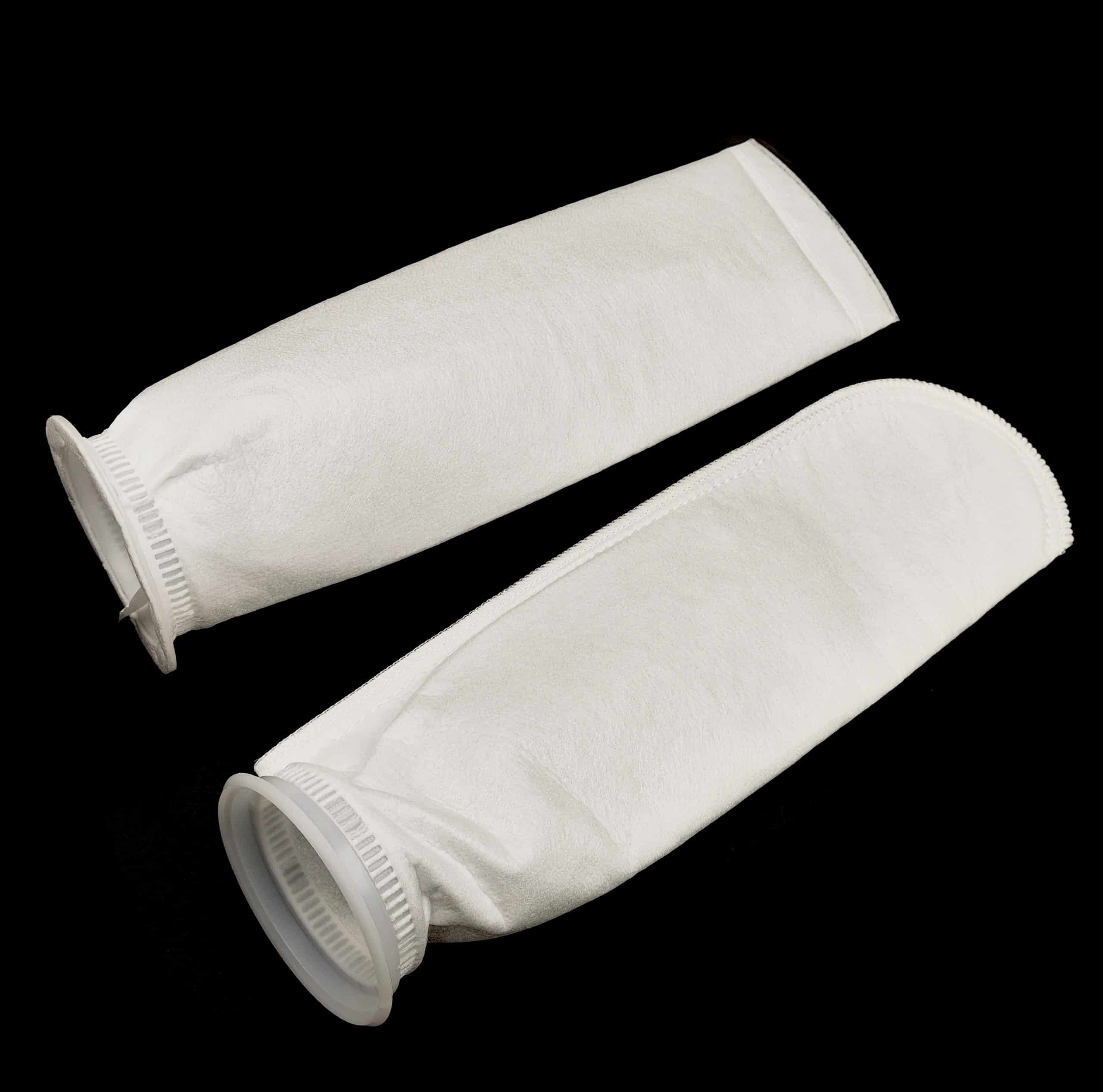
At its core, a liquid filter bag is a pressure-driven filtration component. Unlike surface filtration (where particles are trapped only on the top layer), many modern filter bags utilize depth filtration. This allows the media to capture particles throughout its entire thickness, significantly increasing “dirt-holding capacity.”
Why Choose Bag Filtration Over Cartridges?
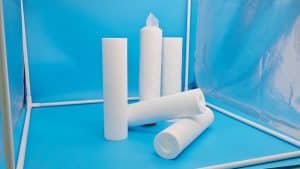
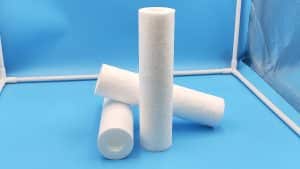
While cartridge filters offer high surface areas for fine polishing, filter bags are preferred for:
-
High Flow Rates: Handling large volumes of fluid with minimal pressure drop.
-
Cost-Efficiency: Lower upfront and replacement costs per gallon filtered.
-
Ease of Disposal: Spent bags are collapsible and generate less waste volume.
-
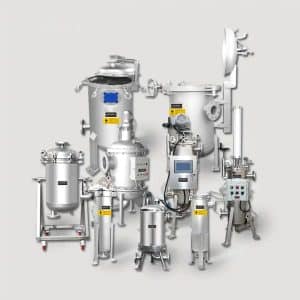
Versatility: Adaptable to standard housings like Eaton, Parker, or Pentair.
2. Media Selection: The Science of Chemical Compatibility
The most critical decision in purchasing is selecting the right fiber. Using an incompatible material can lead to “fiber migration” or the total collapse of the filter.
Polypropylene (PP) – The Industry Workhorse
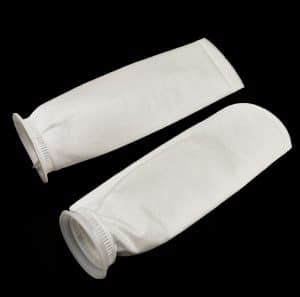
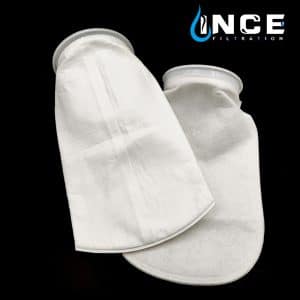
Polypropylene needle felt is the go-to material for the majority of liquid applications.
-
Pros: Excellent resistance to acids and alkalis; extremely cost-effective; silicon-free construction.
-
Temperature Limit: 190°F (88°C).
-
Best For: Water treatment, electroplating, and general chemical processing.
Polyester (PE) – The High-Temperature Alternative
When your process exceeds the thermal limits of PP, Polyester is the standard upgrade.
-
Pros: High tensile strength; resistant to many oxidizing agents and solvents.
-
Temperature Limit: 300°F (150°C).
-
Best For: Hot oil filtration, resins, paints, and coatings.
Nylon Monofilament (NMO) – Precision and Reusability
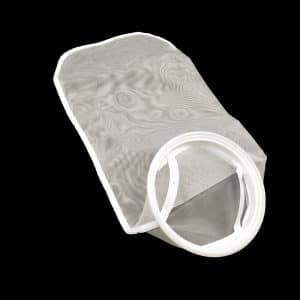
NMO bags are made from a single-fiber weave with fixed apertures.
-
Pros: Highly accurate micron ratings; washable and reusable in certain applications; no fiber migration.
-
Best For: Fine paints, automotive topcoats, and food-grade beverage polishing.
High-Performance Specialty Fibers
-
Nomex (Aramid): For extreme temperatures up to 400°F (204°C).
-
PTFE (Teflon): For the most aggressive corrosive chemicals where nothing else survives.
3. Micron Ratings: Finding the Sweet Spot
The Micron Rating (µm) defines the size of particles the bag will trap. However, understanding the difference between “Nominal” and “Absolute” is where many companies lose money.
Nominal vs. Absolute Efficiency
-
Nominal Rating: Typically captures 60% to 80% of particles at the stated size. Best for “pre-filtration” to protect expensive downstream equipment.
-
Absolute Rating: Captures 99% or more of particles. These are often multi-layered, high-efficiency bags used for “final polishing.”
Common Micron Applications Table
| Micron Rating | Application Type | Common Industries |
| 1 – 5 µm | Fine Polishing | Pharmaceutical, Beverage, Electronics |
| 10 – 50 µm | Intermediate Clarification | Paints, Inks, Resins, Edible Oils |
| 75 – 200 µm | Coarse Filtration | Raw Water, Wastewater, Cooling Towers |
| 250+ µm | Scalping / Strainer | Pulp & Paper, Mining, Large Debris Removal |
4. Construction Matters: Welded Seams vs. Sewn Seams
In 2026, the industry has seen a massive shift toward Fully Welded Construction.
-
Sewn Bags: The traditional method. While strong, the needle holes create a potential path for “bypass”—where small particles escape through the stitch holes.
-
Welded Bags: Utilizing ultrasonic or thermal welding, these bags eliminate needle holes entirely. This ensures a consistent efficiency rating and prevents thread contamination (crucial for the paint and food industries).
The Importance of the Top Seal
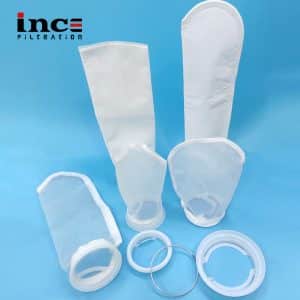
The ring or flange at the top of the bag determines the seal quality.
-
Steel/Stainless Steel Rings: Durable and universal.
-
Plastic Flanges (SDS/Sentinel Style): Feature a pressure-activated “V-shape” seal that eliminates bypass as flow increases.
5. Optimized Sizing and Flow Dynamics
Choosing the wrong size bag can lead to excessive pressure drops and frequent change-outs.
Standard Industry Sizes
-
Size #1: 7″ Diameter x 16.5″ Length
-
Size #2: 7″ Diameter x 32″ Length (The most common industrial size)
-
Size #3: 4″ Diameter x 8″ Length
-
Size #4: 4″ Diameter x 14″ Length
The “Surface Area” Rule: A Size #2 bag has double the surface area of a Size #1. By switching to a larger bag or a multi-bag housing, you can lower the velocity of the fluid through the media, which dramatically improves filtration efficiency and bag life.
6. Industry-Specific Requirements (FDA, Automotive, Oil)
Food & Beverage (FDA Compliance)
Bags must be manufactured in a “Clean Room” environment using virgin materials. They must be free of lubricants, silicones, and adhesives. Look for EC 1935/2004 or FDA CFR Title 21 certifications.
Automotive & Paint
The “Silicone-Free” requirement is absolute. Even a trace amount of silicone can cause “fish-eyes” in a car’s paint finish. High-performance Oil Absorbent Bags are also used here to remove trace oils from pre-treatment baths.
Oil, Gas, and Petrochemical
These environments require high dirt-holding capacity and resistance to volatile organic compounds (VOCs). Multi-layered Extended Life Bags are often used to reduce the frequency of hazardous waste handling.
7. Troubleshooting: When to Change Your Filter Bag?
A common mistake is changing bags on a fixed schedule. The most scientific way is to monitor the Differential Pressure ($\Delta P$).
-
Initial $\Delta P$: Usually 1.0 – 2.0 PSI.
-
Terminal $\Delta P$: Most manufacturers recommend changing the bag when the pressure drop reaches 15 – 25 PSI.
-
The Risk of Waiting: If the $\Delta P$ exceeds 35 PSI, the bag may “blind over” (completely clog) or, worse, burst, sending all collected contaminants downstream.
8. 2026 Market Trends: The Rise of “Smart” Filtration
As we move further into 2026, sustainability and digital monitoring are transforming liquid filtration:
-
Sustainable Media: Demand for recyclable or biodegradable filter fibers is rising as ESG goals become mandatory.
-
IoT Monitoring: Smart filter housings now feature sensors that send mobile alerts to maintenance teams when the bag reaches 80% capacity, preventing downtime.
-
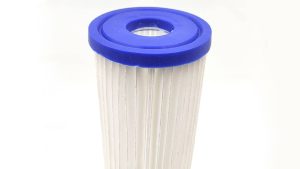
Extended-Life Geometry: New pleated bag designs offer up to 4x the surface area of a standard bag within the same housing footprint.
Conclusion: Balancing Performance and Cost
Selecting the perfect Liquid Filter Bag is a balancing act between the required purity levels and the total cost of ownership. By understanding the nuances of polypropylene vs. polyester, and the advantages of welded over sewn seams, you can ensure a streamlined production process.
Pro Tip: Always perform a pilot test when switching materials. A small investment in testing can prevent a large-scale production bottleneck.
TAGs: pleated liquid filter cartridges china 5 micron filter wholesaler how to choose industrial filter bags 0.22 Micron Pleated Filter Cartridges industrial liquid filter bags Polyester Felt Liquid Filter Bag Pleated Filter Cartridge Manufacturer Pleated Filter Cartridge Factory Pleated Liquid Filter Cartridges How to Choose a Reliable Pleated Filter Cartridge Manufacturer Pleated Liquid Filter Cartridges pleated membrane cartridgesRelated Posts