Step-by-Step Guide: How to Safely Change Liquid Filter Bags
Routine filter bag replacement is one of the simplest ways to maintain stable filtration performance and prevent unnecessary downtime. Whether you’re operating a water treatment system, chemical process line, paint filtration unit, or industrial cooling loop, knowing when and how to replace a liquid filter bag can improve filtration efficiency and extend equipment life.
Many operators search for how to change filter inserts or filter bags only after flow rates begin to drop. In reality, a proactive replacement schedule can prevent performance issues before they impact production.
How Do You Know It’s Time to Change a Filter Bag?
The most reliable indicator is the pressure differential across the filter housing.
As contaminants accumulate inside the filter media, resistance to flow gradually increases. Most filtration equipment manufacturers recommend replacing the filter bag when the pressure drop reaches:
15 PSI (1.0 Bar)
Waiting beyond this point often results in:
- Reduced flow rates
- Increased pump energy consumption
- Higher operating costs
- Potential filter media damage
Because pressure gauges may display readings in PSI, Bar, kPa, or MPa, many maintenance teams use a pressure conversion tool to quickly verify when the replacement threshold has been reached.
Step 1: Stop the Filtration System
Before opening the filter housing:
- Turn off the circulation pump.
- Close the inlet valve.
- Close the outlet valve.
This isolates the housing and prevents fluid from entering during maintenance.
Step 2: Release Internal Pressure
Never open a filter housing under pressure.
Carefully vent the housing and confirm that the pressure gauge returns to zero. If the system contains hazardous or hot liquids, follow your facility’s safety procedures before proceeding.
Step 3: Open the Filter Housing
Remove the housing cover slowly and place it in a clean location.
At this stage, inspect the housing for:
- Sediment buildup
- Damaged gaskets
- Corrosion
- Basket deformation
A quick inspection often helps identify potential issues before they become costly repairs.
Step 4: Remove the Used Filter Bag
Lift the saturated filter bag out of the basket carefully.
Depending on the application, the bag may contain:
- Suspended solids
- Sludge
- Gel contaminants
- Rust particles
- Process debris
Allow excess liquid to drain before disposal.
Step 5: Inspect the Condition of the Used Bag
The used filter bag can provide valuable information about system performance.
For example:
- Excessive sediment may indicate changes in raw water quality.
- Unexpected debris could point to upstream equipment wear.
- Rapid clogging may suggest a finer micron rating is needed.
If you’re filtering process water, it may be worth evaluating whether a 5 micron filter water application requires a staged filtration approach instead of relying on a single filter bag.
Step 6: Install a New Filter Bag
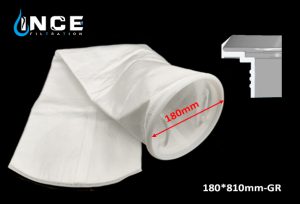
Place the replacement bag securely into the support basket and ensure the sealing ring is properly seated.
Common choices include:
1 Micron Filter Bag
A 1 micron filter bag is often used when fine particle removal is required, such as:
- Process water filtration
- Food and beverage production
- Chemical processing
- Final polishing filtration
5 Micron Filter Bag
A 5 micron filter is one of the most widely used filtration grades because it provides an excellent balance between filtration efficiency and service life.
Typical applications include:
- Industrial water treatment
- Cooling water systems
- Paint filtration
- Wastewater treatment
- Semiconductor coolant filtration
Selecting the correct micron rating helps maximize filter life and reduce replacement frequency.
Step 7: Reassemble the Housing
After installing the new filter bag:
- Replace the housing cover.
- Tighten all fasteners evenly.
- Verify that seals and O-rings are correctly positioned.
Proper sealing prevents fluid bypass and ensures consistent filtration performance.
Step 8: Restart the System
Open the inlet valve slowly and allow the housing to fill completely.
Once trapped air has been vented:
- Open the outlet valve.
- Start the pump.
- Monitor the system for leaks.
Gradual startup helps protect the new filter bag from sudden pressure shocks.
Step 9: Record the Clean Pressure Reading
One maintenance habit that is often overlooked is recording the initial pressure differential after installing a new bag.
This baseline reading makes it easy to track filter loading over time and identify the optimal replacement interval.
When the differential pressure approaches 15 PSI (1.0 Bar) again, the filter bag should be replaced to maintain peak system performance.
Choosing the Right Filter Bag for Longer Service Life
The best filter bag is not always the finest one.
For example:
- A 1 micron filter bag provides excellent particle removal but may clog faster in high-solids applications.
- A 5 micron filter often delivers longer service life while still capturing a large percentage of suspended particles.
- Multi-stage filtration systems frequently combine coarse and fine filtration to reduce overall operating costs.
Proper filter selection can significantly reduce maintenance frequency and improve filtration efficiency.
Final Thoughts
Changing a liquid filter bag is a straightforward maintenance task, but timing is critical. Monitoring pressure differential remains the most effective way to determine when replacement is necessary.
As a general guideline, replace the filter bag when the pressure drop reaches 15 PSI (1.0 Bar). Combined with the correct micron rating—whether a 1 micron filter bag, 5 micron filter water application, or standard 5 micron filter—this approach helps maintain consistent flow rates, improve filtration performance, and reduce operating costs.
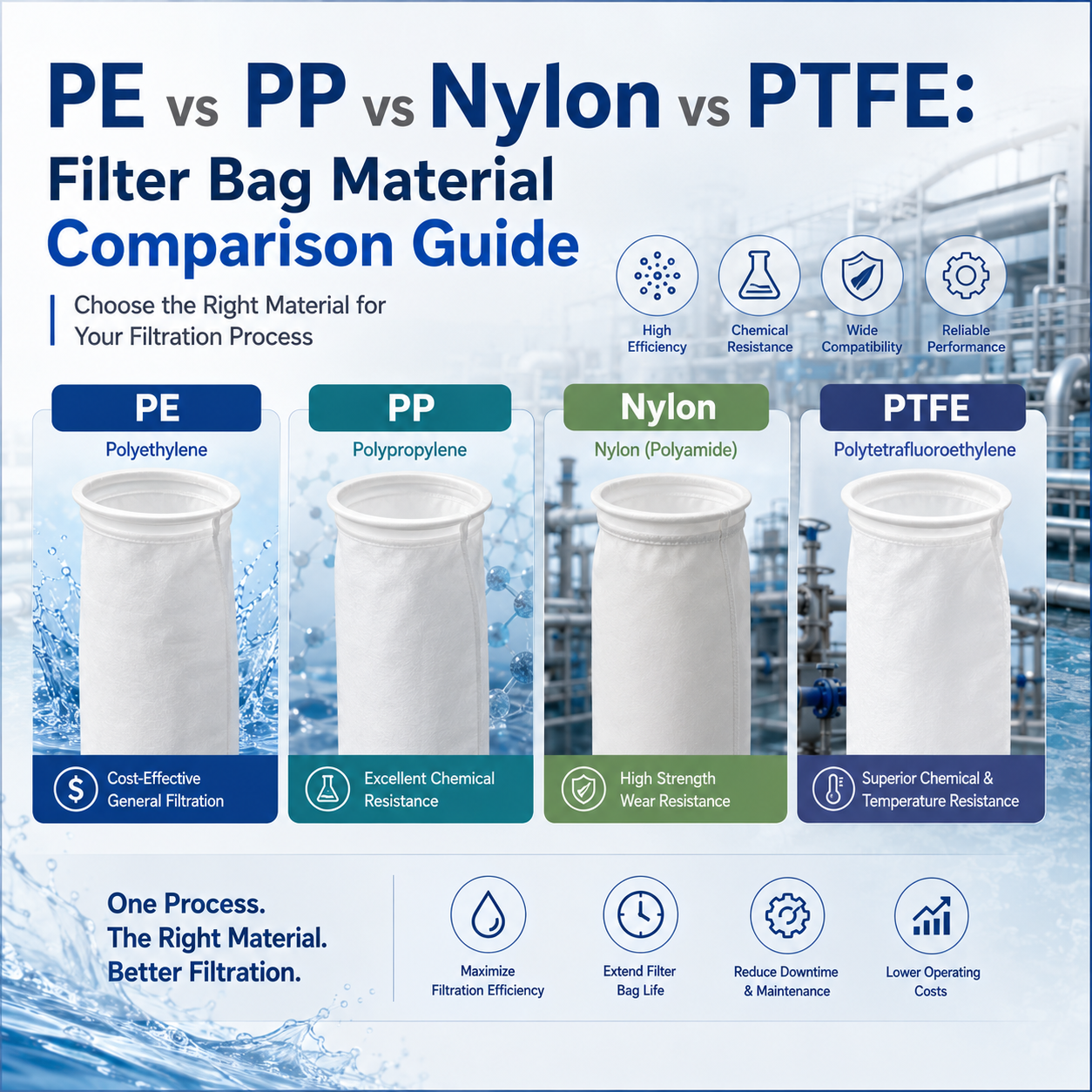
At INCE, we manufacture a full range of liquid filter bags in polyester, polypropylene, nylon mesh, and PTFE materials. Our team can help you select the right micron rating, filter bag size, and housing configuration for your specific application.
Need help choosing the right replacement filter bag? Contact INCE today for expert filtration support and customized recommendations.
TAGs: pleated liquid filter cartridges china 5 micron filter wholesaler how to choose industrial filter bags 0.22 Micron Pleated Filter Cartridges industrial liquid filter bags Polyester Felt Liquid Filter Bag Pleated Filter Cartridge Manufacturer Pleated Filter Cartridge Factory Pleated Liquid Filter Cartridges How to Choose a Reliable Pleated Filter Cartridge Manufacturer Pleated Liquid Filter Cartridges pleated membrane cartridgesRelated Posts