Solving Filtration Challenges: High-Performance Pleated Liquid Filter Cartridges Explained
In the demanding landscape of modern industrial processing, the quest for fluid purity is relentless. Whether you are managing a large-scale municipal water plant, a high-tech semiconductor facility, or a precision pharmaceutical line, the integrity of your liquid filtration system is non-negotiable. Among the various technologies available today, pleated liquid filter cartridges have emerged as the gold standard for those seeking a balance of high flow rates, absolute precision, and long-term cost-efficiency.
As we look at the industrial requirements of 2026, standard filtration solutions often fall short of meeting the rigorous purity standards and environmental regulations now in place. This guide explores why pleated technology is the superior choice for liquid-phase separation and how to select the right configuration for your specific operational needs.
Why Surface Area Matters: The Science of Pleating
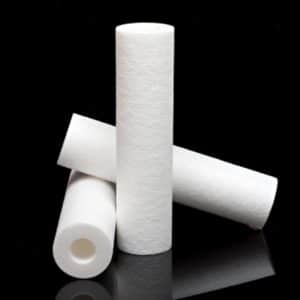
At its core, the effectiveness of any filter is dictated by its surface area. Traditional depth filters, such as melt-blown or string-wound cartridges, rely on the thickness of the media to trap particles. While effective for heavy dirt loads, they often suffer from rapid pressure build-up and inconsistent micron retention.
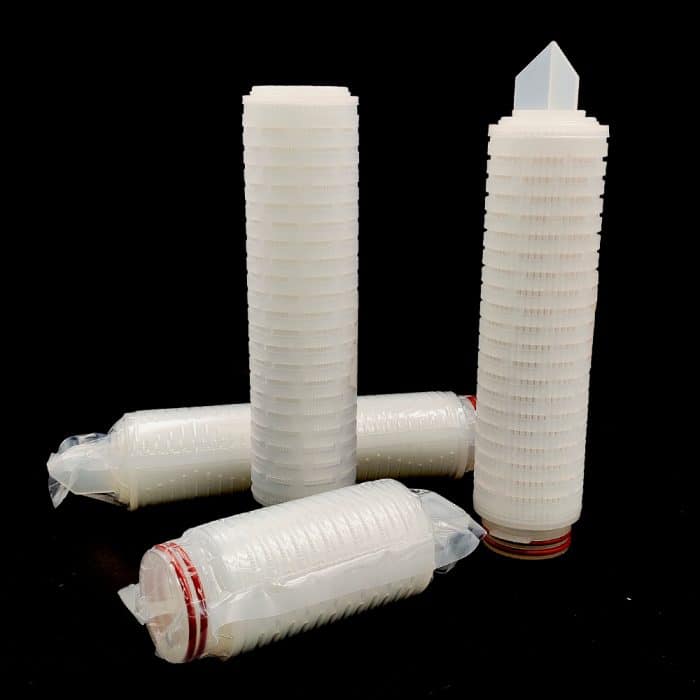
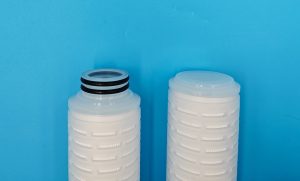
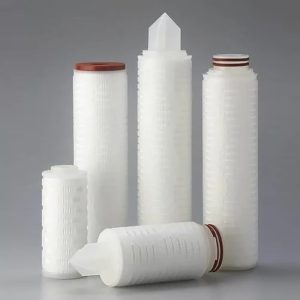
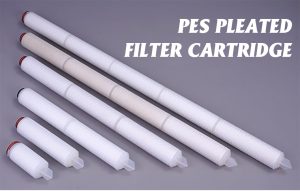
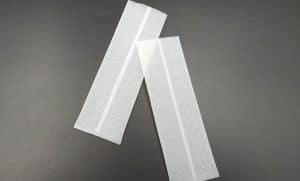
Pleated liquid filter cartridges revolutionize this concept by folding the filtration media—typically made of polypropylene, polyethersulfone (PES), or PTFE—into a series of tight, uniform pleats. This design exponentially increases the Effective Filtration Area (EFA) within the same standard footprint (usually a 2.5” or 2.7” diameter).
The Structural Advantage
By increasing the surface area, the fluid velocity through each square inch of the media decreases. This lower “face velocity” ensures that:
-
Deformable particles are less likely to be “pushed” through the pores.
-
Pressure drop (ΔP) remains low for a longer period, reducing the energy required by your pumps.
-
Cake formation is more uniform, allowing the filter to utilize its entire capacity before needing a change-out.
Key Advantages of Pleated Liquid Filter Cartridges
When evaluating your filtration overhead, it is important to look beyond the initial purchase price. The value of a pleated element is found in its operational performance.
1. Absolute Micron Ratings
Most depth filters are “nominal,” meaning they catch a percentage of particles at a certain size. In contrast, high-quality pleated liquid filter cartridges are available with absolute ratings (up to 99.99% efficiency). This level of precision is critical for “final stage” filtration where downstream equipment or product quality cannot be compromised.
2. High Dirt Holding Capacity (DHC)
The expanded surface area doesn’t just help with flow; it provides more “real estate” for contaminant capture. In many industrial applications, a single pleated cartridge can replace three to five standard depth filters, significantly reducing the frequency of maintenance intervals.
3. Thermal and Chemical Resilience
Modern manufacturing often involves aggressive chemicals or high-temperature cleaning cycles (such as CIP or SIP). Pleated cartridges are typically constructed using thermal bonding techniques rather than adhesives or resins. This all-polypropylene or fluoropolymer construction ensures that the filter won’t leach surfactants or binders into your process stream.
Strategic Applications Across Industrial Sectors
Because of their versatility, pleated liquid filter cartridges are utilized in almost every sector where liquid purity is a KPI.
Food and Beverage Processing
In the production of beverages, clarity is synonymous with quality. Pleated filters are used for the “polishing” of bottled water, beer, and wine. Specifically, PES membrane pleated cartridges are used for cold stabilization to remove yeast and spoilage organisms, preserving the flavor profile while ensuring shelf stability.
Pharmaceutical and Biotech
For sterile fill-finish operations, the stakes are at their highest. Pleated cartridges designed for this sector are 100% integrity tested during manufacturing. They are capable of withstanding multiple autoclave cycles and are compliant with USP Class VI biological safety standards.
Microelectronics and UPW Systems
Ultra-Pure Water (UPW) systems require the removal of sub-micron particles that could ruin a semiconductor wafer. Pleated PTFE or high-purity PP cartridges are the primary defense against colloidal silica and other microscopic contaminants in these high-stakes environments.
Industrial Chemical and Petrochemical
From amine filtration to the removal of catalysts, pleated elements provide the chemical compatibility needed to handle aggressive solvents, acids, and bases without structural failure.
Technical Specifications: Understanding the Data Sheet
Selecting the right pleated liquid filter cartridge requires a deep dive into the technical parameters. A generic filter might fit the housing, but it won’t necessarily optimize the process.
Materials of Construction
-
Media: Polypropylene (General purpose), PES (High flow/Hydrophilic), PTFE (Hydrophobic/Chemicals), or Nylon 66 (Solvents).
-
Support & Cage: Usually Polypropylene or specialized polymers for high-temperature resistance.
-
O-Rings/Gaskets: EPDM, Silicone, Viton, or PTFE-encapsulated Viton.
Dimensions and Configurations
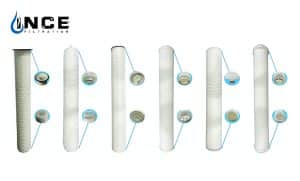
Industrial housings vary globally. Common end-cap configurations include:
-
DOE (Double Open End): Standard flat gaskets on both ends.
-
Code 7 (226/Fin): Featuring a locking tab and two o-rings for high-pressure security.
-
Code 3 (222/Flat): A double o-ring plug-in style.
Performance Metrics
| Parameter | Standard Industrial Grade | Pharmaceutical/Electronic Grade |
| Micron Range | 0.1μm – 100μm | 0.03μm – 1.2μm |
| Efficiency | 90% – 99% | 99.9% – 99.99% (Absolute) |
| Max Operating Temp | 80°C (176°F) | Up to 125°C (257°F) with support |
| Integrity Testable | No | Yes (Bubble point/Diffusion) |
Comparison: Pleated vs. Depth Filtration
| Comparison Factor | Pleated Cartridges | Depth Filters (Melt-blown) |
| Initial Cost | Higher | Lower |
| Service Life | 3x to 10x longer | Shorter |
| Flow Rate | Exceptionally High | Moderate to Low |
| Precision | Absolute Retention | Nominal Retention |
| Waste Volume | Low (Fewer change-outs) | High (Frequent disposal) |
The Verdict: While depth filters have a lower “sticker price,” the Total Cost of Ownership (TCO) for pleated liquid filter cartridges is almost always lower in high-volume industrial settings due to reduced labor, less downtime, and lower disposal fees.
Best Practices for Installation and Maintenance
To get the most out of your pleated liquid filter cartridges, follow these industry-proven steps:
-
Proper Pre-filtration: Never use an absolute pleated filter as the primary stage for high-turbidity water. Use a low-cost depth filter (5-10 micron) as a “sacrificial” pre-filter to extend the life of your expensive 0.2-micron pleated final filter.
-
Monitor Differential Pressure: Install pressure gauges on the inlet and outlet of the filter housing. Change the filters when the ΔP reaches the manufacturer’s recommended limit (typically 2.0 – 2.5 bar). Waiting too long can cause “bypass” or structural collapse.
-
Forward Flow Only: Most pleated cartridges are designed for outside-to-inside flow. Reversing the flow can damage the pleat pack and cause catastrophic failure.
-
Wetting Procedures: For hydrophobic membranes like PTFE used in liquid applications, ensure the media is properly wetted with a low-surface-tension fluid (like alcohol/water mix) before introducing the process fluid.
Conclusion: Engineering Your Way to Pure Performance
In the modern industrial era, filtration is no longer a “set it and forget it” commodity. It is a critical engineering variable that directly impacts your product yield and operational overhead. Transitioning to high-capacity pleated liquid filter cartridges is one of the most effective ways to stabilize your process and protect your downstream investments.
By choosing an element that offers the right combination of chemical compatibility, absolute precision, and structural integrity, you aren’t just buying a filter—you are securing your production line’s future.
Partner with INCE Filtration for Your Custom Needs
At INCE Filtration, we specialize in high-performance liquid separation solutions. Our team of engineers understands that every fluid stream has a unique fingerprint. We provide:
-
Customized pleat densities for specific dirt loading profiles.
-
A wide array of chemical-resistant media.
-
Detailed technical audits to help reduce your annual filter spend.
Ready to upgrade your process efficiency?
[Contact the INCE Filtration Technical Team] today for a free consultation or to request a quote for your specific housing configuration. Let us help you find the absolute solution to your filtration challenges.
Related Posts