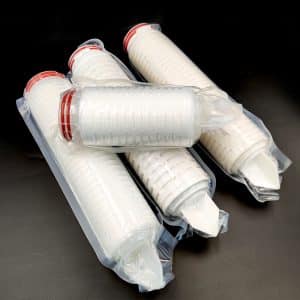
Selecting a Leading Pleated Filter Cartridge Manufacturer: The 2026 Industrial Procurement Guide
Introduction: The Critical Role of the Manufacturing Partner
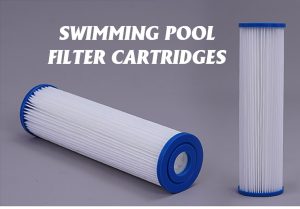
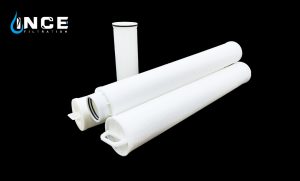
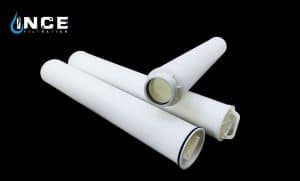
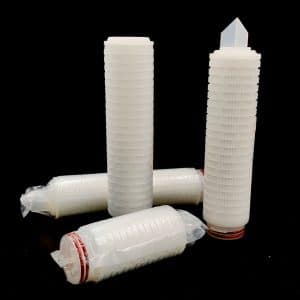
In the modern industrial landscape, filtration is no longer a secondary utility; it is a primary driver of product quality, equipment longevity, and process efficiency. A pleated filter cartridge represents the pinnacle of surface filtration technology, offering significantly higher surface area and lower pressure drops than traditional depth filters.
However, the difference between a standard vendor and a high-tier pleated filter cartridge manufacturer lies in the details of engineering, material science, and quality control. Whether you are managing ultrapure water for semiconductor fabrication or ensuring the sterility of pharmaceutical batches, your choice of manufacturer directly impacts your operational uptime and bottom line. This guide provides a deep dive into the standards that define a top-tier manufacturing partner in 2026.
1. The Architecture of Excellence: Advanced Manufacturing Processes
A professional manufacturer does not simply assemble components; they engineer a precision instrument. The production of a high-performance pleated filter involves several critical stages that determine its reliability in the field.
Cleanroom Production Standards
Contamination during the manufacturing process can lead to catastrophic failures in downstream applications. Leading manufacturers operate ISO Class 7 or Class 8 cleanrooms to ensure that every cartridge, from the pleating of the media to the final thermal welding of the end caps, remains free from environmental particulates and microbial load.
Thermal Bonding vs. Adhesive Usage
In 2026, the industry standard has shifted entirely toward thermal bonding technology. By using heat to fuse the filter media, cage, core, and end caps, manufacturers eliminate the need for glues, resins, or surfactants. This “all-polypropylene” or “all-fluoropolymer” construction ensures that no extractables leach into the process fluid—a non-negotiable requirement for food, beverage, and medical applications.
2. Material Science: Selecting the Core Filter Media
The heart of any pleated filter is the media itself. A versatile industrial filter manufacturer must offer a range of polymers to handle diverse chemical environments and temperature ranges.
| Media Type | Characteristic | Primary Industrial Application |
| Polypropylene (PP) | Broad chemical compatibility, high dirt-holding. | Pre-filtration, chemicals, general water treatment. |
| Polyethersulfone (PES) | High flow rates, naturally hydrophilic, sterile grade. | Pharmaceuticals, beer/wine clarification, biologics. |
| PTFE (Hydrophobic) | Extreme temperature and chemical resistance. | Tank venting, sterile air, aggressive acids/solvents. |
| PTFE (Hydrophilic) | Excellent for aggressive aqueous solutions. | Microelectronics, wet etching, photoresists. |
| Nylon 66 | Strong, durable, naturally hydrophilic. | Solvent filtration, ink and coatings, electronics. |
3. Engineering Precision: Pleat Geometry and Effective Filtration Area (EFA)
A common misconception is that more pleats always equal a better filter. In reality, a sophisticated pleated filter cartridge manufacturer optimizes pleat geometry to ensure maximum flow and minimum resistance.
The Science of Pleat Density
If pleats are packed too tightly, the “bridge effect” occurs, where the fluid cannot reach the bottom of the pleat, effectively reducing the filtration area. Advanced manufacturers use computer-aided design to calculate the optimal pleat height and density, ensuring that the Effective Filtration Area (EFA) is fully utilized.
Graded Density Structures
High-tier manufacturers often incorporate multiple layers of media within a single cartridge. By placing a coarser pre-filter layer upstream of the final membrane, the cartridge can capture a broader range of particle sizes, significantly extending the service life and protecting the expensive final membrane layer.
4. Technical Specifications and Customization (OEM/ODM)
For many industrial systems, standard off-the-shelf solutions are insufficient. A partner that offers custom filter element manufacturing provides a significant competitive advantage.
Absolute vs. Nominal Micron Ratings
Precision is defined by the Beta Ratio. While nominal filters are suitable for general clarification, critical processes require Absolute Rated Pleated Filters. A reputable manufacturer will provide a validation guide proving a Beta Ratio $\ge$ 5000 (99.98% efficiency) for their absolute-rated products.
End Cap Adaptors and Hardware
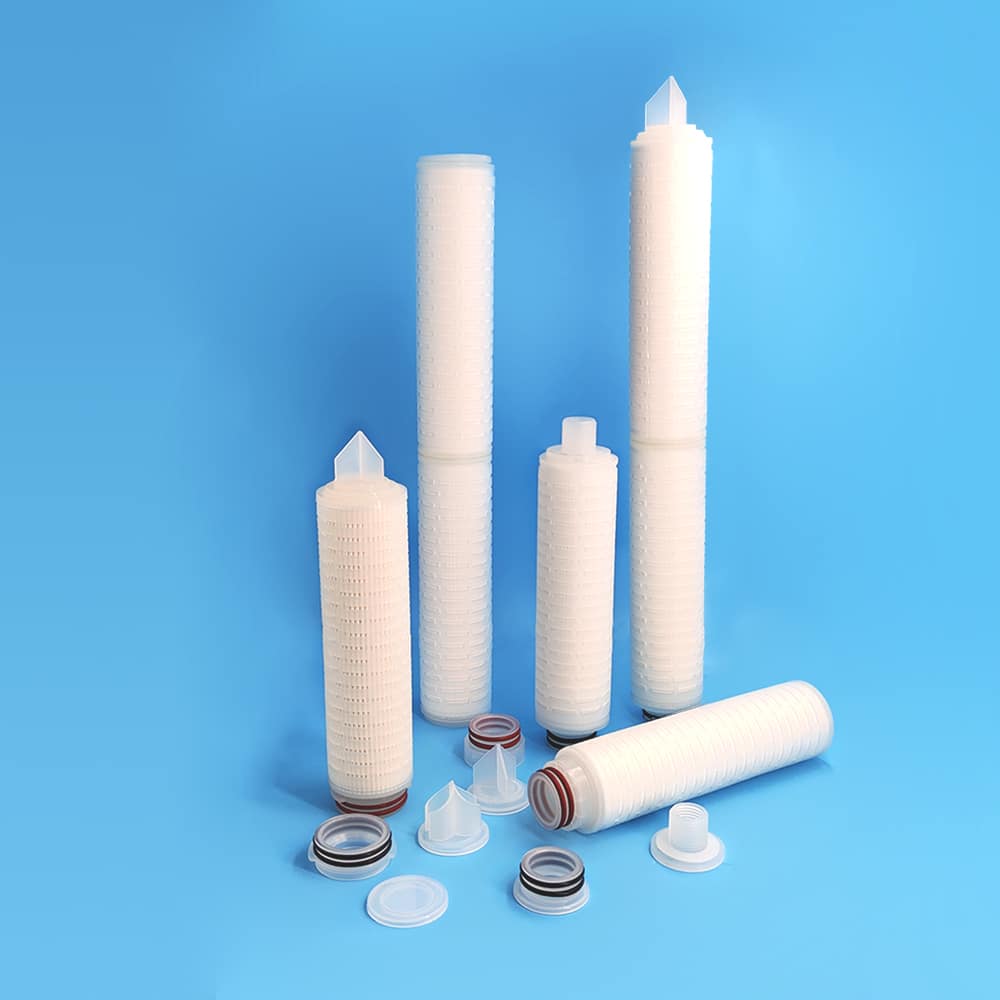
Compatibility is key to reducing bypass risks. Manufacturers must provide a comprehensive range of end cap configurations, including:
-
Code 7 (226/Fin): The standard for pharmaceutical and high-pressure liquid systems.
-
Code 3 (222/Flat): Secure O-ring seal for general industrial use.
-
DOE (Double Open End): For traditional housing replacements.
-
Custom Lengths: Beyond the standard 10″, 20″, 30″, and 40″, offering 5″ or 60″ variations for specialized equipment.
5. Application Focus: Where Manufacturing Quality Matters Most
The value of a high-quality pleated filter manufacturer is most evident in high-stakes industries.
Pharmaceuticals and Biotechnology
In these sectors, the filter must be more than efficient—it must be sterile and validated. Manufacturers provide integrity-tested cartridges that meet USP Class VI biological safety standards and are documented for bacterial challenge tests (e.g., Brevundimonas diminuta).
Food and Beverage Production
For breweries, wineries, and bottled water plants, the goal is clarity and shelf-stability without altering the sensory profile. FDA-compliant pleated filters ensure that no odors or flavors are added, while effectively removing spoilage organisms like yeast and bacteria.
Chemical and Botanical Extraction
In specialized fields like botanical extraction, filters must handle complex lipid profiles and varying solvent temperatures. Graded-density PP filters are essential here to prevent premature blinding of the media by waxy particulates.
6. The Economics of Procurement: Total Cost of Ownership (TCO)
As a procurement professional, the “price per unit” is often a misleading metric. A high-quality wholesale pleated filter cartridge may have a higher initial cost but offers a much lower Total Cost of Ownership (TCO).
Calculating the Value Proposition
The TCO of a filtration system is defined by:
-
Change-out Frequency: A filter that lasts twice as long reduces both consumable costs and labor downtime.
-
Energy Efficiency: Lower initial differential pressure ($\Delta P$) reduces the load on pumps, leading to significant energy savings over the year.
-
Risk Mitigation: The cost of a single batch failure due to a cheap, bypassed filter can outweigh years of savings on procurement.
High-Flow Systems: The Future of Industrial Efficiency
The shift toward High-Flow Pleated Cartridges (6-inch diameter) is a prime example of TCO optimization. By allowing higher flow rates per element, facilities can reduce the number of cartridges required, leading to smaller housing footprints and faster maintenance cycles.
7. Global Supply Chain and Quality Assurance
Choosing a direct pleated filter manufacturer provides transparency that distributors often cannot match.
Quality Control Protocols
Every cartridge should undergo rigorous testing before leaving the factory:
-
Integrity Testing: Bubble point and diffusion flow tests.
-
Pressure Resistance: Testing for burst pressure and fatigue resistance.
-
Flow-Delta P Characterization: Ensuring the filter meets the promised flow dynamics.
Traceability and Documentation
In regulated industries, traceability is mandatory. Top manufacturers laser-etch batch numbers and serial numbers on every cartridge, allowing for full backward-integration data—from the raw material fiber lot to the cleanroom shift that assembled the final product.
FAQ: Essential Questions for Your Manufacturer
Q: Can you provide equivalent replacements for major brands like Pall or Parker?
A: Yes, a capable manufacturer can produce “form-fit-function” equivalents that match or exceed the performance of tier-1 brands at a more competitive wholesale price.
Q: What is the maximum operating temperature for a PP pleated filter?
A: Typically, standard polypropylene cartridges are rated up to 80°C (176°F), though the maximum differential pressure decreases as the temperature rises. For higher temperatures, stainless steel or PTFE media is recommended.
Q: Do you offer private labeling (OEM) for distributors?
A: Most leading industrial filter manufacturers offer OEM services, including custom branding on the end caps and specialized packaging for global distribution.
Conclusion: Partnering for a Cleaner Future
The selection of a pleated filter cartridge manufacturer is one of the most consequential decisions for any process engineer or procurement manager. By focusing on manufacturing integrity, material expertise, and long-term TCO, you ensure that your filtration system remains a robust asset rather than a liability.
As we look toward the future of industrial processing, the demand for higher purity and greater efficiency will only increase. Partnering with a manufacturer that prioritizes technical innovation and validated quality is the surest way to meet these challenges head-on.
Contact our technical engineering team today to discuss your specific application or to request a comprehensive quote for your next bulk procurement project.
[Download the 2026 Filtration Catalog]
TAGs: pleated liquid filter cartridges china 5 micron filter wholesaler how to choose industrial filter bags 0.22 Micron Pleated Filter Cartridges industrial liquid filter bags Polyester Felt Liquid Filter Bag Pleated Filter Cartridge Manufacturer Pleated Filter Cartridge Factory Pleated Liquid Filter Cartridges How to Choose a Reliable Pleated Filter Cartridge Manufacturer Pleated Liquid Filter Cartridges pleated membrane cartridgesRelated Posts