Why PALL High Flow Cartridges are the Gold Standard for Large-Scale Filtration (2026 Updated)
In the high-stakes world of industrial fluid processing, the name Pall is synonymous with precision. When a facility transitions from pilot-scale production to massive, high-volume throughput, the filtration system often becomes the bottleneck. This is where the Pall High Flow filter cartridge earned its reputation as the industry “Gold Standard.”
This article explores the engineering innovations, economic advantages, and technical superiorities that allow Pall to dominate the large-scale filtration market.
1. The Anatomy of a Revolution: The 6-Inch Diameter Design
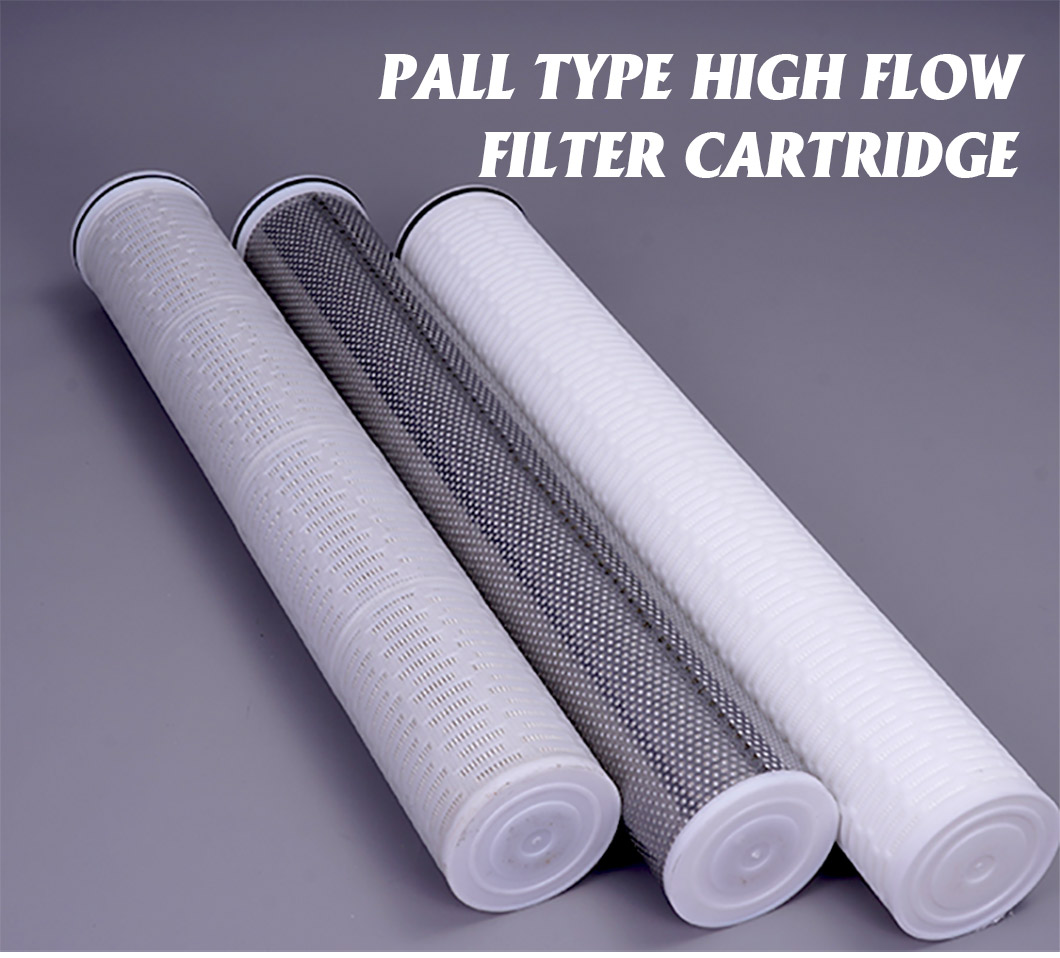
The most visible distinction of the Pall High Flow system is its physical footprint. While standard industrial filters typically measure 2.5 inches in diameter, Pall pioneered the use of a 6-inch (152 mm) large-diameter format.
Why Diameter Matters
In fluid dynamics, surface area is the currency of efficiency. By expanding the diameter, Pall allows for a significantly higher volume of pleated media to be packed into a single element.
-
Massive Throughput: A single 40-inch Pall High Flow cartridge can handle flow rates up to 500 gallons per minute (gpm) or $114 m^3/h$.
-
Reduced Element Count: To achieve the same flow rate with standard 2.5-inch cartridges, you would need approximately 20 to 30 individual elements.
2. Radial Pleat Geometry: Maximizing Every Square Inch
The true “magic” of the Pall system isn’t just the size; it is the Radial Pleat Geometry. Traditional filters use longitudinal pleats (running up and down the length of the core). As the pleat density increases, the tips of the pleats become crowded, creating “dead zones” where fluid cannot easily reach the media.
The Pall Advantage:
-
Uniform Flow: Radial pleating ensures that the space between pleats remains consistent from the core to the outer cage.
-
High Dirt-Holding Capacity (DHC): Because every square millimeter of the media is accessible, the filter captures more contaminants before reaching the terminal differential pressure ($\Delta P$).
-
Low Clean Pressure Drop: Lower resistance means your pumps consume less energy to maintain the required flow rate.
3. Inside-to-Out Flow Path: Ensuring Process Integrity
Most standard filters flow from the outside in. Pall High Flow cartridges utilize an inside-to-out flow path. This design choice is critical for large-scale operations for two primary reasons:
-
Contaminant Containment: When it is time for a filter change-out, all captured debris is trapped inside the cartridge. When the element is lifted out of the housing, there is zero risk of the “dirt” falling off and contaminating the clean side of the filter vessel.
-
Structural Strength: Under high flow conditions, the fluid pressure pushes outward against the robust outer cage of the cartridge. This prevents pleat bunching and bypass, ensuring the integrity of the filtration even during pressure surges.
4. The Economic Argument: CAPEX vs. OPEX
For procurement managers, the “Gold Standard” label must be justified by the balance sheet. Pall High Flow systems offer a dual-pronged economic advantage.
CAPEX Savings (Capital Expenditure)
Because a single High Flow cartridge handles the work of dozens of standard filters, the filter housing can be significantly smaller.
-
Smaller Footprint: A housing for High Flow elements takes up roughly 30% to 50% less floor space than a traditional multi-round vessel.
-
Lower Initial Cost: Smaller vessels require less stainless steel, fewer valves, and simplified piping, reducing the initial investment for new plant builds.
OPEX Savings (Operating Expenditure)
-
Labor Efficiency: Changing one High Flow cartridge takes minutes. Changing 30 standard cartridges takes hours. In high-throughput industries like botanical extraction or power generation, reducing downtime is a direct boost to the bottom line.
-
Disposal Costs: Fewer cartridges mean less hazardous or solid waste to process at the end of the filter’s life.
5. Technical Comparison: High Flow vs. Standard Cartridges
| Feature | Standard 2.5″ Cartridge | Pall High Flow (6″) |
| Flow Rate per 40″ Element | 10–20 GPM | Up to 500 GPM |
| Surface Area | ~5–7 sq. ft. | ~50–60 sq. ft. |
| Flow Direction | Outside to Inside | Inside to Outside |
| Change-out Time | High (Multi-element labor) | Minimal (Single-element labor) |
| Typical Efficiency | Often Nominal | Absolute (Beta 5000) |
6. Applications Where Pall High Flow Dominates
While Pall High Flow is used globally, certain industries rely on it as a non-negotiable standard:
Reverse Osmosis (RO) Pre-Filtration
In desalination and municipal water plants, protecting expensive RO membranes from silt and particulates is vital. Pall cartridges provide the absolute-rated protection needed to prevent membrane fouling.
Botanical and Phyto Extraction
In the large-scale processing of plant extracts, fluids often contain high lipid and wax content. The high dirt-holding capacity of the radial pleat ensures that the filters don’t “blind” (clog) prematurely, allowing for continuous batch processing.
Chemical and Petrochemical Processing
Handling aggressive solvents and high-temperature fluids requires a filter that won’t degrade. Pall’s all-polypropylene construction and thermal bonding ensure zero bypass and high chemical compatibility.
7. Quality Assurance: The “Absolute” Guarantee
A key reason for the “Gold Standard” status is Pall’s commitment to Absolute Ratings. Many competitors sell “Nominal” filters, which might be 90% efficient. A Pall Absolute-rated cartridge is validated to 99.98% efficiency (Beta 5000) at the specified micron rating.
Technical Note: In large-scale filtration, a 10% bypass (common in nominal filters) can mean thousands of pounds of contaminants passing through to your expensive downstream equipment every year. Pall’s absolute rating eliminates this risk.
8. Sustainability in 2026: The “Less is More” Philosophy
As global industries face stricter environmental regulations, the waste profile of a facility is under the microscope.
-
Reduced Plastic Waste: By using fewer, more efficient elements, a facility significantly reduces the volume of spent plastic sent to landfills.
-
Energy Recovery: The lower differential pressure provided by the radial pleat design directly translates to lower kilowatt-hour consumption by the system’s feed pumps.
Conclusion: Why the Investment Pays Off
The “Gold Standard” isn’t about being the cheapest on the shelf; it’s about being the most reliable in the housing. Pall High Flow cartridges provide a level of engineering sophistication—from radial pleating to the inside-out flow path—that competitors struggle to replicate.
For facilities where downtime is measured in thousands of dollars per hour, the reliability, ease of maintenance, and absolute precision of Pall High Flow technology make it the only logical choice for large-scale filtration.
Procurement Checklist for High Flow Systems:
-
Verify the Beta Ratio: Ensure you are getting Absolute (99.98%) efficiency.
-
Check Hardware Compatibility: Confirm your housing adaptors match the Pall 6-inch profile.
-
Assess TCO: Look beyond the unit price and calculate your annual labor and energy savings.
Ready to upgrade your filtration efficiency? Consult with a technical expert to audit your current flow rates and discover how a transition to High Flow technology can streamline your production.
TAGs: pleated liquid filter cartridges china 5 micron filter wholesaler how to choose industrial filter bags 0.22 Micron Pleated Filter Cartridges industrial liquid filter bags Polyester Felt Liquid Filter Bag Pleated Filter Cartridge Manufacturer Pleated Filter Cartridge Factory Pleated Liquid Filter Cartridges How to Choose a Reliable Pleated Filter Cartridge Manufacturer Pleated Liquid Filter Cartridges pleated membrane cartridgesRelated Posts