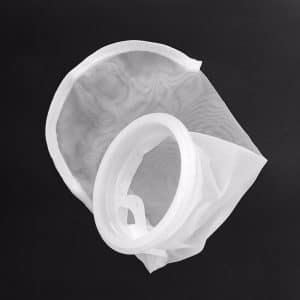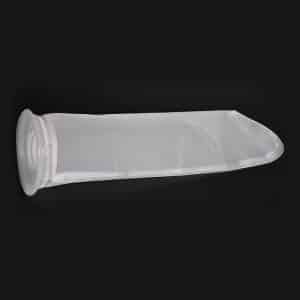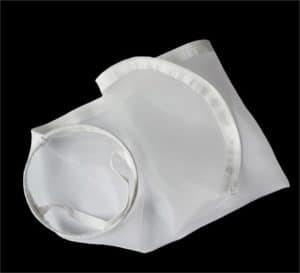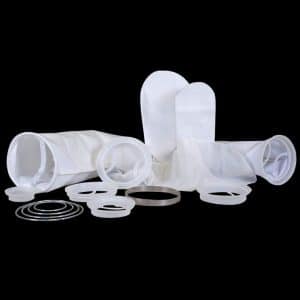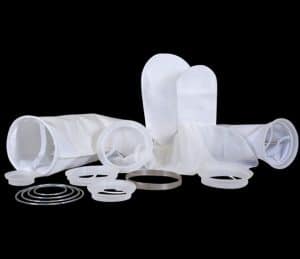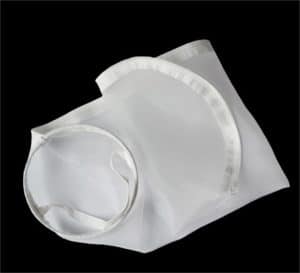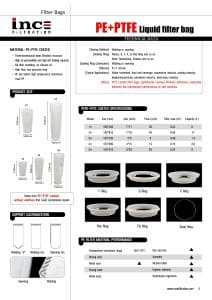
The Professional Guide to 5 Micron Filter Bags: Precision Filtration for Industrial Excellence
In the science of fluid dynamics, the difference between product purity and batch failure is often measured in microns. The 5 micron filter bag represents one of the most critical “sweet spots” in industrial filtration—offering a level of clarity that is fine enough to remove microscopic sediment, yeast, and fine carbon, yet porous enough to maintain high flow rates in pressurized systems.
As global manufacturing standards tighten in 2026, selecting a 5 micron filter bag is no longer a generic procurement task. It requires an understanding of material compatibility, particle loading capacity, and the physics of pressure drop. This guide provides the technical and economic framework for optimizing your filtration process with 5-micron precision.
1. What Does “5 Micron” Actually Mean? Understanding Retention
To master the use of a 5 micron filter bag, one must first distinguish between Nominal and Absolute filtration ratings.
-
Nominal 5 Micron: This means the bag will trap a major percentage (typically 60% to 80%) of particles that are 5 microns or larger. These are ideal for pre-filtration and general industrial water treatment.
-
Absolute 5 Micron: These bags are engineered to trap 99% or more of 5-micron particles. These are reserved for critical applications like pharmaceutical buffers or final-stage food and beverage processing.
The Scale of 5 Microns
To put this in perspective:
-
A human hair is approximately 70 microns in diameter.
-
White blood cells are roughly 25 microns.
-
5 microns is the size of individual silt particles or large bacteria.
2. Material Selection: Matching the Media to the Chemistry
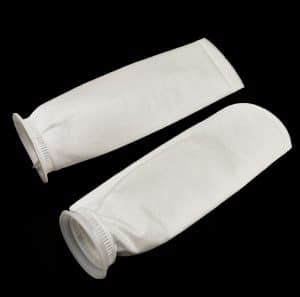
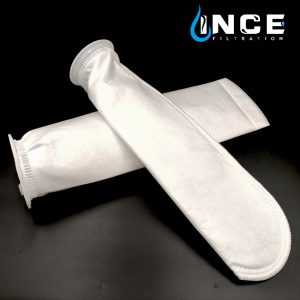
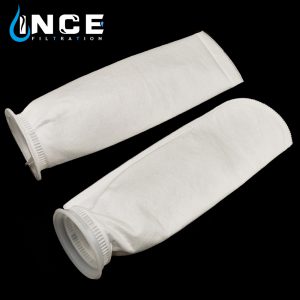
A 5 micron filter bag is only as effective as the polymer from which it is constructed. In 2026, three materials dominate the wholesale market:
A. 5 Micron Polypropylene (PP) Felt
The most popular choice for general liquid filtration.
-
Pros: Broad chemical resistance (especially to acids), low cost, and FDA compliance.
-
Best For: Water treatment, plating chemicals, and electronic grade fluids.
B. 5 Micron Polyester (PE) Felt
Ideal for higher-temperature applications where polypropylene might soften.
-
Pros: Heat stable up to 150°C and excellent tensile strength.
-
Best For: Hot oils, petrochemicals, and automotive coatings.
C. 5 Micron Nylon Monofilament (NMO)
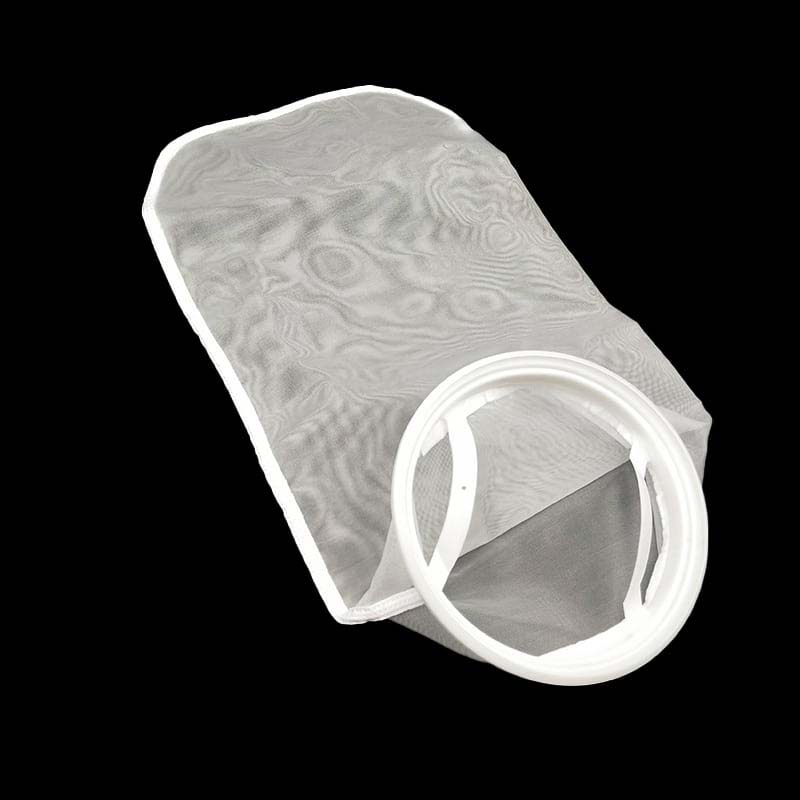
While felt uses “depth filtration” (trapping particles inside the fabric), nylon uses “surface filtration.”
-
Pros: Precise pore size, zero fiber migration, and it is easily washable.
-
Best For: Paint straining, food-grade extractions, and critical clarity applications.
3. The Physics of Pressure: Delta P ($\Delta P$) and Throughput
Every 5 micron filter bag acts as a resistor in your fluid system. The “Clean Pressure Drop” is the initial resistance the bag offers to the flow.
The flow velocity ($v$) through the filter media can be modeled using a modified version of Darcy’s Law:
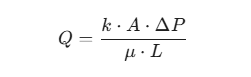
-
Q: Flow rate.
-
A: Surface area of the bag.
-
$\Delta P$: Pressure differential.
-
µm : Fluid viscosity.
Pro Tip: When using a 5 micron filter bag, the goal is to maximize the surface area (using a Size #2 bag instead of a Size #4) to keep $\Delta P$ low, which extends the “dirt-holding capacity” of the bag and reduces energy costs for your pumps.
4. Key Applications: Why 5 Microns is the Industry Standard
Food and Beverage Clarification
In the production of beer, wine, and juices, a 5 micron filter bag is the primary tool for removing “haze” particles and residual yeast before final bottling. It ensures the liquid is visually brilliant without stripping away essential flavor compounds.
Pharmaceutical Pre-filtration
Before a drug solution reaches a 0.22-micron sterile membrane, it must be pre-filtered. A 5-micron bag removes the bulk of organic debris, preventing the expensive sterile membranes from clogging prematurely—a strategy that saves facilities thousands of dollars in annual filter costs.
Automotive E-Coat and Paint
In the automotive sector, a 5-micron contaminant in the primer tank can lead to “craters” in the final finish. Professional paint shops utilize welded 5 micron filter bags to ensure that not a single thread or oversized particle touches the vehicle’s surface.
5. Construction Excellence: Welded vs. Sewn Seams
In 2026, the global shift toward welded seams for 5 micron filter bags has become a benchmark for quality.
-
Sewn Bags: Use a needle and thread, which creates holes approximately 100-200 microns in size along the seam. This leads to “bypass,” where particles larger than 5 microns slip through the needle holes.
-
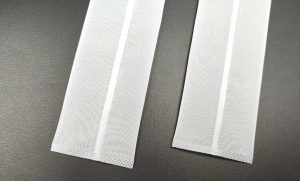
Welded Bags: Use ultrasonic or thermal welding to fuse the fabric. This creates a 100% leak-proof seal, ensuring that the 5 micron filter bag actually delivers 5-micron performance across its entire surface.
6. Maintenance: When to Change Your Filter Bag?
Waiting for a 5 micron filter bag to burst is a recipe for disaster. Professional operators use “Pressure Differential Gauges.”
-
Start: Note the initial pressure (e.g., 2 PSI).
-
Monitor: As the bag fills with sediment, the pressure will rise.
-
Change-out: When the pressure reaches 15-20 PSI (or the manufacturer’s recommended limit), the bag should be replaced.
Operating beyond this point risks “strike-through,” where the pressure forces trapped particles through the mesh and into your clean product.
7. ROI: The Economics of 5-Micron Precision
Sourcing 5 micron filter bags wholesale is a strategic move for operational efficiency.
-
Reduced Rework: In the coatings industry, a 5-micron bag reduces the “re-paint” rate by up to 30%.
-
Equipment Protection: Fine filtration protects high-pressure pump seals and spray nozzles from abrasive wear, extending equipment life by years.
-
Batch Consistency: For chemical manufacturers, a 5-micron standard ensures that every shipment meets the customer’s Certificate of Analysis (COA).
8. Frequently Asked Questions (FAQ)
Q: Can a 5 micron filter bag remove bacteria?
A: It can remove some large bacteria and cysts (like Giardia), but it is not a sterilizing filter. For 100% bacterial removal, you typically need a 0.22-micron absolute-rated membrane.
Q: Is a 5 micron bag better than a 1 micron bag?
A: Not necessarily. If your fluid is very dirty, a 1-micron bag will clog in minutes. A 5 micron filter bag is often used as a “pre-filter” to protect the 1-micron bag, ensuring a longer total run time.
Q: Are these bags compatible with oils?
A: Yes, especially if made from Polyester or Nylon. Polypropylene is also generally oil-compatible but has a lower temperature threshold.
Conclusion: Elevating Your Filtration Strategy
The 5 micron filter bag is a quiet powerhouse in modern manufacturing. Its ability to balance clarity, flow, and cost makes it an essential component of any high-performance fluid system. By selecting the right material, insisting on welded construction, and monitoring pressure differentials, you ensure that your process remains clean, efficient, and profitable.
Need a technical audit of your filtration system? Our 2026 series of 5 micron filter bags is engineered for maximum throughput and zero-bypass reliability. Contact our engineering team today for custom sizing and wholesale pricing.
[Request a Technical Quote] | [Download the 2026 Micron Selection Chart] | [Order a Sample Pack]
TAGs: pleated liquid filter cartridges china 5 micron filter wholesaler how to choose industrial filter bags 0.22 Micron Pleated Filter Cartridges industrial liquid filter bags Polyester Felt Liquid Filter Bag Pleated Filter Cartridge Manufacturer Pleated Filter Cartridge Factory Pleated Liquid Filter Cartridges How to Choose a Reliable Pleated Filter Cartridge Manufacturer Pleated Liquid Filter Cartridges pleated membrane cartridgesRelated Posts